If You Revaluate Admission Can They Decline You Again?
You've sent out your applications and can't terminate envisioning yourself at your meridian-choice school. Only then the unthinkable happens: you lot become a higher rejection letter. You first to wonder: what went wrong? What do I do now? Is it still possible to nourish my superlative-pick school? The truth is that I've been in this verbal aforementioned situation. In 2008, I got rejected from my tiptop-choice school, Stanford. Though the rejection letter injure, on the plus side, information technology taught me a lot about what I did wrong, both in my application and my overall high school career. In this article, I use my own rejection experience equally a guide to explain how probable a college rejection is for y'all, how to avert getting rejected from college, and the steps to take in case your height-selection school only isn't that into you. Commencement things start, how probable is it that you lot'll really go rejected from higher—more importantly, from your top-option school? The answer to this question varies depending on two principal factors: As y'all might've guessed, your chances of getting rejected from college depend a lot on how hard your summit-selection school is to become into. Many students' top choices are Ivy League institutions, such as Harvard, Princeton, and Columbia, or other prestigious peak-25 schools, such as Stanford, Rice, and the Academy of Chicago. Now, what do many of these schools have in common? That's right: extremely low acceptance rates. These rates dramatically affect your likelihood of getting accepted (or getting rejected). Below are the acceptance rates for the top 25 universities, as determined by the virtually recent U.s. News rankings for 2022. All schools are listed in society of ranking. (Pro tip: click the schoolhouse proper noun to learn more nearly its admission requirements!) Every bit you can see, your chance of acceptance to pinnacle-tier colleges ranges from simply 4% to equally much every bit 21%. Your chance of college rejection is highest for schools ranked in the top 10. At these colleges, the typical applicant has a whopping ninety-95% run a risk of getting rejected. These are very, very general estimates, though. How high or low your chances of rejection are will ultimately depend on the overall strength of your application (we hash out this more below). To get a slightly more accurate thought of your admission chances to a item school, utilise our higher admissions figurer. Notwithstanding, the bespeak is clear: most applicants to highly selective schools get rejected. Your chance of getting a college rejection letter will be less likely if your meridian-option school is ranked lower and has a higher admission rate. The other major factor that affects your chances of getting rejected from college is the strength of your application. A stiff higher application usually has the following features: For the Ivy League and other highly competitive schools, you'll definitely need to stand up out from other applicants. And the best fashion to do this is to create a big spike in your application. A spike is essentially something you lot're passionate about and have continuously striven to master. It could be anything from a dear of writing short stories to a passion for chemistry. Most importantly, your spike should be a field yous're truly committed to and for which you have sufficient testify to prove your commitment. If you have a fasten also as high test scores, a high GPA, etc., yous'll take a much better gamble of being a elevation-selection candidate for your school. All of this also means that you should avoid aiming for a well-rounded application. This tin can put you correct in the crapshoot of college applications, significantly reducing your chance of acceptance (and thereby increasing your chance of rejection). For more tips on how to put together a strong application, wait at a real Harvard application and acceptance letter, supplied past our resident perfect SAT/ACT scorer. Some of you reading this might be wondering why I'm writing this commodity. Well, let me showtime with some facts. Rejection is zippo new to me. I applied to college in 2008 (yeesh, I'm getting erstwhile!). At the time, Stanford was my top choice, so I practical restrictive early activeness, meaning that my awarding was due earlier (by November 1) and that Stanford was my #one pick for college. A trivial while later, I received a rejection by e-mail. It was the first university I heard dorsum from in the application process, and its alphabetic character was by far the near painful. I remember bursting into tears as shortly every bit I finished reading it and and so running to my parents for condolement. So many questions ran through my head: how come they didn't like me? What did I do wrong? Did I mess upwards my application somehow? Was I simply not good enough? Months after, I got accustomed to USC and decided to nourish that school instead. And I had a smash: I joined a couple of clubs, wrote for the school newspaper, worked on campus, made skilful friends, and had an overall fun and eclectic experience I'd never trade for anything. Sometimes, though, I think back to that initial college rejection and wonder: how did I manage to get through such a difficult, stressful time in my life? And how tin I use what I know at present to assist other students in the same position I was once in? Here's why I'chiliad telling you all of this: Now that you know my story, allow's offset with the positives: how to avoid getting rejected from college in the first place. If this doesn't work out for yous, no worries—I'll also give you advice on what to do if you do get rejected. Since getting my first college rejection from Stanford, I can tell you this: I've learned a lot virtually what I did wrong in my awarding. For ane, my application wasn't unique enough. I didn't have a "spike" that made me stand up autonomously from other applicants; instead, I naively believed in the misconception that well rounded was what all top schools wanted the most. (Hint: it's not!) In addition, my Sat score wasn't up to par. At the fourth dimension I thought I'd done adequately well on the exam, but I didn't realize that pretty practiced isn't usually skillful enough for top schools like Stanford. These days, you lot'd need to score at to the lowest degree a 1500 (or in the top ii%) just to meet the average at Stanford! Finally, I didn't take advantage of the AP/honors classes available at my loftier schools (I moved and attended two schools). I call back thinking that two or 3 AP classes and a couple of loftier AP scores would exist skillful enough. Again, though, this isn't that impressive to top-ranked schools. So what tin yous do to ensure that you take a better risk of getting into your acme-choice school? Here are my top half dozen tips. About students probably know this, but you'll need a pretty high GPA to keep from getting rejected. Why? Well, a high GPA proves that you're not only responsible and studious but likewise capable of performing consistently well in a multifariousness of disciplines. By excelling in several classes, you're providing direct show of your deep commitment to learning and academic success. So what constitutes a loftier GPA? The reply to this will depend on the school you're applying to. If you're applying to a top-25 school such as Stanford, aim for a 4.0 (unweighted ) or pretty close to it. If you lot're not certain how high of a GPA your schoolhouse expects, endeavour looking on the school'due south website for any data or information about the average GPA of admitted applicants. That being said, getting a high GPA alone isn't as important as getting a good GPA and taking a challenging course load. Here's what I mean by this: when applying to summit colleges, a 4.0 unweighted GPA is no doubt great. However, yous'll be a much more competitive applicant if you have, say, a slightly lower iii.8 GPA and take also taken loads of challenging AP/honors courses. This means that you could get mostly As and a couple of Bs in challenging AP courses and still have a higher run a risk of getting accepted over someone who got all Every bit but took just like shooting fish in a barrel classes. This is because colleges like to see that you're continuously challenging yourself. For me, this was a disquisitional indicate I didn't become at all in high school. I took a few AP and honors courses, but I didn't take nearly as many as I should have. Instead, I stuck mostly to classes I knew I'd get As in and refrained from truly challenging myself past taking harder ones. This is probably function of the reason Stanford rejected me. Like the tip above, this is kind of a no-brainer, but you'd exist surprised how little I thought of information technology when I applied to college back in 2008. NOTE: As a result of the pandemic, nearly every school became test-optional for at to the lowest degree 2020 and 2021, and some schools accept decided to become permanently exam optional. This means that, if you're applying to 1 of these schools, you don't need to submit SAT or ACT scores, and your application won't be at a disadvantage. However, a loftier ACT or Saturday score can still be a meaning boost to your application, particularly if y'all're on the bubble in other areas. While colleges sympathise that the SAT/Human action is simply ane part of your application, it's still pretty of import to go a high score on one of the 2 tests—specially a score that sets y'all apart from other applicants. A good Sat/ACT score will vary depending on the schools you're applying to. For example, if y'all were applying to Harvard, you'd want to aim for 1580 on the Sat or 35 on the Human activity. These are the 75th percentile scores for admitted applicants to Harvard. In other words, get this score level and you'll accept a higher score than 75% of applicants. Even if you got slightly lower than this—such as a 1570 on the Sat or a 34 on the Act—you'd still exist in relatively good shape. The bespeak, however, is that you want to shoot equally high equally possible so you lot can requite yourself the best chance of admission. On the other hand, if you lot were applying to a less selective school like the University of Houston, you'd just need an Saturday score effectually 1300 or an Human action score around 27. Again, yous could all the same get accepted with slightly lower scores than these, merely aiming high ensures you lot'll have a neat shot. Every bit you lot tin can encounter, what'due south considered a high SAT/ACT score will depend greatly on where you're applying. If you tin can hitting (or almost hit) your top-pick school'southward 75th percentile score, you'll stand out and lower your chances of rejection. To observe your school'south test score information, search for "[School Name] PrepScholar" on Google. Click our link to the school's Admission Requirements page to see the schoolhouse's average Sat/Deed scores and its 25th/75th percentiles. This piece of advice is essential for those applying to the Ivy League or Ivy League-level institutions (and it'south definitely something I wish I'd known dorsum when I applied to Stanford). And here's what information technology is: role of crafting an incredible college application is working on developing a fasten. I briefly introduced this concept earlier, just now let's look at in detail. Your spike is what makes you stand out from other applicants. This is typically an ongoing passion for and commitment to some kind of academic or personal interest. For instance, perhaps y'all're a lover of writing who's published his ain self-help ebook and tutors simple school students in creative writing on weekends. Or perhaps you lot're a science whiz who's conducted numerous experiments and submitted her results to conventions. Go the motion picture here? Think of this spike as the opposite of being well rounded. When I applied to Stanford, I causeless that well rounded = automatic acceptance. I was a member of my school'due south honor society, ran on the cross state team for two years, and played the piano in my spare time. All of this, I idea, made me a well-rounded, ideal candidate. Boy, was I wrong. In truth, colleges—particularly selective ones like Stanford—see tons of applicants similar this. This is probable a large reason I got rejected: I wasn't unique enough! Instead, I should accept spent more time developing the hobbies I enjoyed most and participating in activities more strongly tied to my nearly passionate interests. That'south what I did wrong. Now, here's what you lot tin exercise correct. Below, I list some options you tin endeavor to assistance you further develop your spike: All in all, don't rely on the trap of being well rounded, particularly if yous're trying to become accepted to highly selective schools. Fifty-fifty if you've got both stellar grades and a high SAT/ACT score, schools want to run across that you lot're an interesting, passionate person who is committed to learning. This is why information technology's important to spend a lot of time crafting an impactful personal statement for your application. In general, a skilful personal argument volition achieve the following: The statement is a great opportunity to explain what your spike is, how you got interested in it, and what kind of role you run across information technology playing in your future. For a detailed await at what makes for a powerful personal statement, bank check out our analysis of more than 100 college essays. In addition, the personal statement lets you lot explain the context of your academic situation. For example, does your high schoolhouse non offer whatsoever AP or honors courses? Or are yous the first person in your family to nourish college? It'due south important to answer questions like these in your essay so that the school can take into account your personal circumstances as well every bit how these might have influenced the quality of your application. This mode, you won't get rejected simply because you didn't take whatever AP courses (even though none might have been bachelor to you!). Many schools stress the importance of considering each applicant's circumstances. For example, hither'due south what Stanford says on its website: "We take into account your background, educational pathway, and work and family responsibilities. By focusing on your achievements in context, nosotros evaluate how yous have excelled in your school environment and how you accept taken advantage of what is available to you in your schoolhouse and community." And here's how Duke considers your background in applications for admission: "Every bit a part of our holistic arroyo, we consider both your academic and personal interests, what you've accomplished, and your unique experiences, perspectives, and groundwork." Evidently, the personal statement isn't just an opportunity to showcase your fasten and strengths—it's also a run a risk to explicate your personal situation. Practice all of this, and y'all'll be far less likely to go rejected for something like a slightly lower SAT score. Want to write the perfect higher application essay? Get professional help from PrepScholar. Your dedicated PrepScholar Admissions counselor volition arts and crafts your perfect higher essay, from the ground upwards. We'll learn your background and interests, brainstorm essay topics, and walk you through the essay drafting procedure, step-by-pace. At the stop, y'all'll have a unique essay that you'll proudly submit to your top pick colleges. Don't leave your higher application to run a risk. Find out more than about PrepScholar Admissions at present: If your pinnacle-choice school offers an early activity or early decision programme, definitely do it (but but do the latter if yous're 100% certain this is the schoolhouse you lot desire to attend). About early activity/early determination deadlines are November 1 or Nov 15. These deadlines are about a month or 2 earlier than most regular decision deadlines. And so how does applying early action/early decision affect your admission chances? Data shows that those who apply early activity or early decision typically accept higher credence rates than those who apply regular decision. This doesn't necessarily hateful you lot'll get accepted. I applied early action to Stanford and still got rejected. Nevertheless, an early application might give yous a slight border over other applicants, as information technology shows the school you're committed to it and actually desire to continue your education there. The just drawback to applying early action/early decision is that the early deadline gives you less fourth dimension to put together a strong application. If you're struggling to prepare an constructive application for an early on activeness plan, consider applying regular decision instead to give yourself more time. This leads me to my next point ... Whether you're applying early action/early decision or regular decision, information technology can be tempting to blitz through the awarding process, especially since most students are extremely busy at the start of senior year. Even though this is a stressful time, endeavour your all-time not to rush through your application to your top-choice school. Merely put, don't write your personal statement the day before the deadline, and don't ask for letters of recommendation from teachers at the final infinitesimal. Why is this so important? If you spend too little time working on your application, you run a much college risk of doing the following: I advise spending at least a few months on your college applications. And while all applications are equally of import, information technology'due south OK to spend a footling extra time on the application for your tiptop choice, if only because it's the schoolhouse y'all're almost interested in. Also, don't exist agape to ask questions by emailing or calling the school. For example, confused about application instructions? Send an email. Not sure what a "supplementary document" is? Call the admissions section. Improve to brand sure you're following the rules than to risk getting your application butterfingers because yous made a huge (but entirely preventable) mistake. When I applied to Stanford, I thought I'd taken my time to do the awarding, but I actually hadn't. It was simply later I submitted information technology that I realized I'd made some dire mistakes. Here'southward my most memorable: at the fourth dimension, Stanford allowed applicants to adhere supplementary files. So I fastened a sample affiliate from a novel I was writing to bear witness my passion for writing. But after submitting my application, I reread the awarding instructions and realized that chapters of fiction was something Stanford specifically requested applicants to non send in. Oops! Unfortunately, fifty-fifty if you heed all the tips above, you could still wind up with a higher rejection alphabetic character. I'll be honest: getting rejected sucks. But it certainly doesn't mean your academic career (or life, if y'all're dramatic like me) is over. Hither are some ways to cope with a college rejection, besides as options on what to do after you lot go rejected from college: This is really, really of import. One time yous get the dreaded college rejection letter from your top-choice school, it can feel as though the whole world is crashing downwardly around yous. I'1000 hither to tell you that this feeling is totally normal. After all, you're essentially grieving—sounds cheesy, I know. But it's the truth. And when something bad happens, it's important to take time to let yourself experience sad about it. In this case, even though you probable worked really hard in schoolhouse, you lost the opportunity to nourish the college of your dreams. All of your future plans must change, which sucks. Information technology'southward OK (and even expected) to be upset virtually this. Here are some healthy options for coping with a college rejection: Although grieving is important, don't allow yourself get wrapped up in your sorrows for too long. In one case you've given yourself aplenty time to cope, get off the ground and focus on the other options y'all've got in your life. Too, try not to allow the rejection negatively impact your grades, extracurriculars, and other college applications (if yous haven't finished all of them notwithstanding). While your top-selection school might've rejected yous, remember that this is just i schoolhouse, and you (hopefully) accept several others y'all're applying to or already practical to. These are the schools it's time to get excited about, regardless of whether yous've heard dorsum from them. In that location is a reason you applied to each school you lot applied to. As you lot get through the schools y'all've been accepted to, concentrate on the specific features and opportunities y'all liked about each schoolhouse. For example, what inspired you to apply there? Can you envision yourself feeling at home on campus? What kinds of classes and majors does it offer? Do yous like its emphasis on Greek life? What almost its awesome football team? If possible, talk to current students at the schools then you can start to imagine yourself attention them. Doing this will non only make you excited about your other options merely will also prevent you from daydreaming about what might've happened had you been accepted to your superlative choice. Finally, call back that you will probable be able to study what you desire to at these other schools as well. Just because your acme-choice school rejected y'all, that doesn't mean you notwithstanding can't get a BA in Psychology or a BS in Informatics. If you lot didn't get accepted to your height-choice school, a gap year can assistance you figure out what kind of education you want in life while also providing you with some interesting experiences (which could potentially strengthen future college applications!). After your gap year, you tin then reapply to your top-choice school, with a fresh perspective and a slightly better understanding of where your application might've gone incorrect before. While in that location'south zilch wrong with taking a year off earlier college, be sure y'all're actually making your gap year worthwhile. Neither colleges nor your parents volition exist impressed if all you exercise is sit at domicile and play video games all day. Make your gap twelvemonth an take a chance: work a new job, travel abroad, intern at a company, join a community guild, learn a foreign language. Hopefully, you lot'll get experiences out of your gap year that'll help you lot in the field y'all want to major in. For example, if you're thinking well-nigh majoring in English, taking a yr off to write a novel and submit stories you've written to literary magazines would be an excellent use of your time (assuming your parents are OK with it, of course!). Later, when you brainstorm the process of reapplying to your top-choice school, yous can explain in your application what y'all did during your gap year and why you chose to accept a year off before starting college. If yous decide to reapply, it'due south a skilful thought to use your old application as a reference. Think nigh where you might've gone incorrect and how you lot tin can improve on it this time (ideally, by incorporating some of your gap-twelvemonth experiences into it). A word of caution, though: don't put all your eggs in ane basket. In other words, don't look to get admitted simply considering yous applied before and now deserve to get in. Admissions is often a brutal procedure, and nobody (except those on the admissions commission) knows what a higher is looking for in terms of applicants. And then as you reapply to your height-selection schoolhouse, brand sure you're applying to other schools equally well—ideally, a combination of reach schools and safety schools. If y'all make up one's mind to attend a dissimilar school you got into (which most people exercise, including myself!), know that it might be possible to transfer to your superlative-option schoolhouse in a couple of years. While I wouldn't attend a different college with this exact plan in mind, knowing that transferring is an option in case you notwithstanding actually want to attend your elevation-choice schoolhouse should make you feel a piddling more at ease with your decision to (temporarily) attend a unlike school. Note that to transfer to a school, yous'll usually need to submit an entirely new transfer awarding meaning that information technology can't exist the same one yous submitted before when applying as a freshman. Moreover, transferring is not guaranteed. Many schools, particularly the Ivies, accept very few transfers each year. Harvard stated that they typically accept almost fifteen transfer students out of about 1,500 application, an acceptance rate of ane%. As you tin can run into, here you actually have a lower risk of getting accepted as a transfer pupil than you do as a freshman applicant (the current acceptance rate for which is 4%). If y'all're curious most the transfer acceptance rate at your top-choice schoolhouse, contact your school straight or check out CollegeTransfer.cyberspace, which contains tons of data on schools and their transfer rates. In the cease, though, who knows what'll happen? Yous might end up loving the school you attend and wouldn't fifty-fifty consider transferring out of it. In that location is one final choice you have when it comes to higher rejection, though information technology's one I honestly don't recommend doing: highly-seasoned, or challenging, your rejection. Challenging a college rejection is pretty much what it sounds like. When you get rejected, you accept the option to tell the college you lot think they're wrong and ask them to reconsider your application. So what'southward the problem? Y'all tin can't entreatment your rejection only because you're upset that you didn't become accepted. This is not a practiced enough reason to enquire a college to look at your application again. Even if a schoolhouse did agree to reevaluate your application, it'southward unlikely a 2nd await-through would change their minds (particularly if your master complaint is that they failed to recognize how absolutely incredible you are). Instead, you lot can simply appeal a college rejection if yous accept any new, pregnant information to add to your application, or if there was a major error or trouble with your application. For example, did yous win a big laurels or somehow dramatically improve your GPA? And then see whether y'all tin appeal the rejection. (Not all schools volition let yous do this, though!) In terms of technical problems, did your Sabbatum/Deed score get reported incorrectly to your higher? Or did your transcript get messed up and prove you lot got Ds when y'all actually got Equally? And so appeal the rejection; most likely the college volition allow it in this case since the problem is not actually your fault. In some cases, colleges volition not allow y'all to appeal your rejection at all (even if y'all won the Nobel Peace Prize). In fact, almost top-ranked schools don't permit appeals of admission decisions. If yous disagree with their conclusion, you merely take to wait and reapply the following year. If you're not sure whether your top-choice school allows appeals or non, look at the school'south official website or contact the schoolhouse directly. While rare, it is possible to get into a higher through an appeal (though it's admittedly far less likely to get in this way). Here's an example of a educatee who got accepted to UC Berkeley through an entreatment. After getting my Stanford rejection letter, I cried a lot and talked to my parents. Eventually, I moved on and started to get excited about my other options. I ended up attending USC, where I had a fun, stimulating, and all-around memorable feel—something I wouldn't trade for the world! Nonetheless, getting rejected isn't fun. Unfortunately, it can be a likely consequence if you're applying to highly selective universities and don't take the grades or test scores your school expects. The easiest way to avoid getting rejected from college is to produce the best awarding you can. For top schools, this means yous should typically have the following: If possible, use early on action/early decision to your top-selection school. Applying early raises your hazard of access just slightly, as information technology highlights your commitment to the school. Finally, make sure to take your time with your application—don't rush any part of it! Let'southward say you practice all of this, though, and nonetheless get rejected from your superlative-choice school. Bummer. At this signal, you've substantially got v options (which you can mix and match, every bit desired): No matter what you choose to exercise, take care to remind yourself that getting rejected doesn't mean y'all're a bad pupil or that your application was horrendous. It only means that the school could but acknowledge so many people, and you happened to not be one of them. Even though the college admissions process can feel like an uphill battle, just know that you're definitely non lonely. As we say at my alma mater, "Fight on!" Desire more tips for raising your chances of getting accepted to college? Check out our handy admissions calculator to larn how to estimate your chances of acceptance based on your electric current GPA and test scores. Demand help applying to Harvard and other top schools? This guide covers everything y'all need to know to get into the nation's best colleges and universities. Struggling with the application process? Nosotros're here to help! Our expert guides teach y'all how to build a versatile college awarding and go over the awarding timeline to help you pace yourself. Want to improve your SAT score by 160 points or your ACT score past 4 points? We've written a guide for each test virtually the top 5 strategies you must be using to take a shot at improving your score. Download information technology for free now: 
How Probable Is Information technology That Yous'll Go a Higher Rejection Alphabetic character?
How Competitive Is Your Top-Choice School?
School United states News Ranking Acceptance Rate Princeton one iv% Harvard 2 (tie) iv% Columbia two (tie) 4% MIT ii (tie) 4% Yale 5 5% Stanford half dozen (tie) 4% University of Chicago 6 (tie) 6% University of Pennsylvania 8 vi% Caltech 9 (tie) 7% Johns Hopkins 9 (tie) vii% Northwestern nine (tie) 7% Duke 9 (tie) half-dozen% Dartmouth 13 6% Brown fourteen (tie) 5% Vanderbilt 14 (tie) 7% Washington Academy in St. Louis fourteen (tie) xiii% Rice 17 (necktie) nine% Cornell 17 (tie) ix% University of Notre Matriarch 19 xv% UCLA 20 14% Emory 21 13% UC Berkeley 22 17% Georgetown 23 (tie) 12% University of Michigan 23 (necktie) twenty% Carnegie Mellon University 25 (tie) 15% University of Virginia 25 (tie) 21% 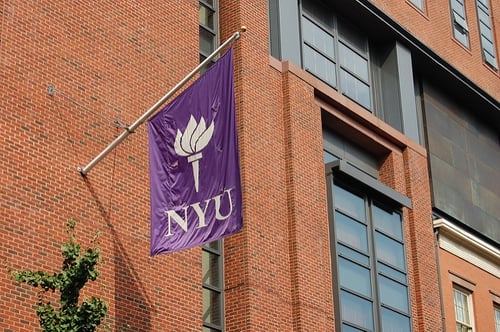 You accept a lower hazard of getting rejected from NYU than you practice from Columbia. (jpellgen (@1179_jp)/Flickr)
 How Stiff Is Your College Application?
My Experience: I Got Rejected From Stanford
 Unfortunately, my tips for avoiding rejection don't utilize to asking people out on dates.
 How to Avert Getting a College Rejection: vi Tips
#1: Maintain a Loftier GPA While Also Challenging Yourself
#two: Become a High SAT/Act Score
#iii: Piece of work On Developing Your Fasten
 The just matter you want to be well rounded is the chimera yous're blowing.
 #four: Write a Compelling Personal Statement and Consider Context


#5: Apply Early Action/Early on Decision, If Possible
#6: Take Your Time—Don't Blitz the Application Process!
 Got rejected? It'due south OK to get a little dramatic.
 How to Deal With Higher Rejection: 5 Essential Tips
#one: Give Yourself Fourth dimension to Procedure the Rejection
#ii: Get Excited Near Other Schools
 Apparently, you tin even brand your own Disney caste at UC Berkeley!
 #3: Take a Gap Year and Reapply Later on
#4: Think That Transferring Is an Selection
#v: Consider Challenging the Rejection
 Seriously, offset a Disney major and now a successful entreatment? Starting to retrieve I should've attended Berkeley ...
 Conclusion: How to Deal With College Rejection
What'due south Side by side?



Hannah received her MA in Japanese Studies from the University of Michigan and holds a bachelor's degree from the University of Southern California. From 2013 to 2015, she taught English language in Nippon via the JET Plan. She is passionate nearly education, writing, and travel.
Source: https://blog.prepscholar.com/how-to-deal-with-college-rejection

Post a Comment for "If You Revaluate Admission Can They Decline You Again?"